

Cracking 3 Egg Myths & Egg Nutrition Spotlight featuring Green Scallion & Egg Pancakes
Written by Dietitian Elis Halenko & nutrition intern, Rachel Yang
Sponsored by Egg Farmers of Ontario
Key Takeaways
- Egg shell color doesn’t determine nutrition; brown and white eggs have essentially the same nutrients; color is driven by hen breed.
- Farming labels (free-range, cage-free) don’t inherently alter nutrition, feed matters more than housing.
- Hen feed influences the color of the egg yolk (wheat vs corn based diet). The color ranges from pale yellow to deep orange. However, the nutrition and quality of the eggs are not associated with yolk color.
- Dietary cholesterol from eggs is not associated with raising blood cholesterol level for the general public.
March always feels special to me. Not only does it mark the first signs of spring, but it’s also National Nutrition Month. As a dietitian and a parent, this month is especially meaningful to me because it’s all about promoting balanced eating, clearing up misconceptions about nutrition, and sharing practical, science-based information that helps make healthy eating feel more approachable in everyday life.
This March, I’ve partnered with Egg Farmers of Ontario to take a closer look at one of the most versatile and affordable foods in our kitchens: eggs. We will break down the evidence-based facts every shopper should know. I’m also sharing an easy, family-friendly green onion & egg pancake with hoisin sauce recipe that proves just how simple and delicious it can be to make eggs work for any meal of the day.
Myth 1: Brown Eggs Are More Nutritious Than White
A common question I hear from clients is whether the color of an egg’s shell makes it healthier.
Despite long-held beliefs, brown and white eggs are nutritionally comparable. This has been demonstrated in multiple analyses showing similar calories, protein, fat, and micronutrients regardless of shell colour. The only real difference is pigment, or the colour of the egg shell, which does not affect the nutrient content.
Eggshell colour is all about hen genetics (think eye or hair colour, but for chickens). All eggs actually start out white, and as they form, pigments may be added depending on the hen’s genetic makeup (Egg Farmers of Ontario, 2020). So next time you see white eggs on the shelf, don’t overlook them. They’re just as nutritious as brown eggs.
Myth 2: Free-run and Free-range Eggs are Nutritionally Superior
In recent years, the popularity of “free-range” eggs has soared. I heard some clients say they choose free-range eggs because they think the hens are more active and healthier, and therefore the eggs must be higher quality. It’s an understandable assumption, but one that’s often misunderstood.
The term free range refers to how hens are housed, not to the nutritional quality of the eggs themselves. Free-range hens live in a barn with full access to food and water, and are given access to an outdoor area when weather conditions allow. By comparison, “free-run” eggs come from hens raised in similar indoor environments, but without outdoor access (Egg Farmers of Ontario, 2020).
Myth 3: Organic eggs are best
In contrast to free-range or free-run, organic eggs are required to follow certain standards set by the Canadian General Standards Board (CGSB) and are regulated by the Canadian Food Inspection Agency (CFIA). To be certified as organic eggs, the hens must be fed 100% organic, non-GMO feed, and have access to the outdoors.
While these distinctions matter for animal welfare and consumer choice, they don’t significantly change the nutritional value of the egg. An egg’s nutrient profile remains consistent regardless of housing system, meaning living conditions reflect hen welfare practices, not differences in protein, vitamins, or overall nutritional quality.
Which One Is Better: Egg Whites vs. Whole Eggs?
Many of my clients often tell me they choose egg whites over whole eggs because they believe egg whites have more protein and fewer calories or are worried about cholesterol. Here’s the catch: while it’s true that egg whites are lower in calories and fat, most of an egg’s essential nutrients, including vitamins A, D, E, B12, choline, and healthy fats, are concentrated in the yolk. The yolk also adds richness, creaminess, and better texture to your meals.
Regarding cholesterol, research shows that dietary cholesterol from eggs has minimal impact on blood cholesterol for most healthy individuals. In fact, a study published by the Journal of American Heart Association states that for healthy adults, consuming 1 egg per day can fit into a healthy dietary pattern (Xia, Peng‐Fei, et al., 2020).
*Individual health needs can vary. If you have specific health concerns or have been advised to limit cholesterol, it’s best to follow personalized guidance from your healthcare provider.
Prioritizing nutrient density is what truly supports sustainable weight gain, loss, and overall health. Whole eggs are a simple, convenient way to get the most nutritional bang for your buck.
How Hen Feed Influences Egg Nutrition and Yolk Colour
So if shell colors and hen housing doesn’t affect the nutritional value of eggs, what does? It all comes down to what they eat! Just like us, most hens are fed with a balanced diet consisting of grains, vitamins and minerals. In Ontario, most hen diets are corn based (Egg Farmers of Ontario, 2020).
The nutrient composition of an egg can be enriched by adding or modifying the hen’s feed. For instance, omega-3 eggs are produced through the addition of ground flaxseed, fish oil, or other DHA food sources, to the feed. Other common enrichments include vitamin B6, B12, folate, resulting in higher nutritional values in these eggs, and calcium for thicker egg shells.
To buy omega-3 eggs, look for labels explicitly stating “Omega-3” on the carton. Checking the nutrition label can also provide you more insights about other fortifications of the eggs.
Moreover, the feed also affects the color of the yolk. A wheat-based diet will produce a pale yellow yolk, while deeper yellow yolk results from corn, alfalfa, or foraging (free-range hens have access to the barn floor and outdoors). Yolk colour ranges from a spectrum of yellow to orange, but it does not affect the nutrient content or quality of the egg (Egg Farmers of Ontario, 2017).
Eggs for Every Budget
One of the many reasons I include eggs in our weekly shopping list? Value. Compared to many sources of high-quality protein, eggs are affordable, widely available, and have a long shelf-life when stored refrigerated (usually 28 to 42 days from the packaging date). This makes them an excellent choice for families, students, and anyone looking to stretch their food dollars without sacrificing nutrition.
Unlike some trendy “superfoods,” eggs deliver real nutrient value without a premium price tag helping support balanced diets and food security in communities across Ontario and beyond.
A Dietitian Guide to Choosing Eggs for Your Family
From a nutrition standpoint, eggs are essentially equal unless the hen’s feed has been fortified. What usually influences the type of eggs we buy comes down to personal preference, like shell colour, beliefs around animal welfare, availability, and price. Many people gravitate toward brown eggs with deeper yellow-orange yolks, often associating them with a richer flavour or creamier texture, even though these visual cues don’t reliably reflect nutritional differences.
No matter which eggs you choose, you’re still getting a nutrient-dense food that provides high-quality protein, along with essential vitamins and minerals.
The Versatility of Eggs
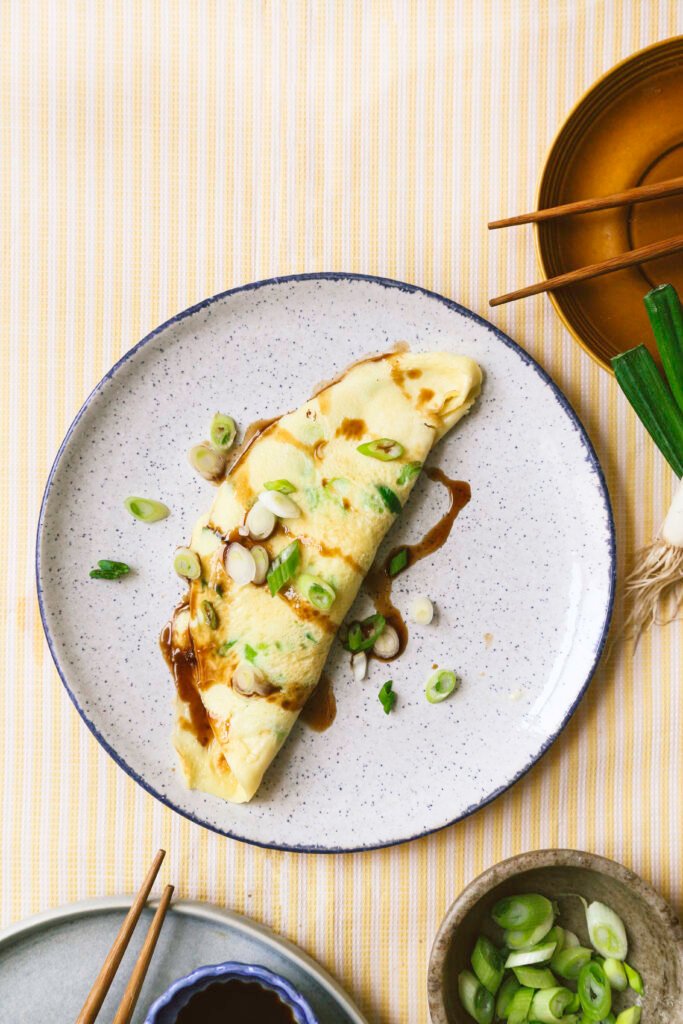
One of the best things about eggs is how versatile and easy they are to work with, and these Green Scallion & Egg Pancakes with Hoisin Sauce are a perfect example. These pancakes are my take on the oriental scallion pancakes that are trending on social media. They are simple, only need 3 ingredients, but tasty enough for the whole family to enjoy together. They’re great for breakfast, lunch, or even a quick weeknight dinner.
Plus, the recipe is flexible! You can add extra veggies or swap in whole-grain flour to suit your family’s tastes and preferences.
Green Scallion & Egg Pancakes with Hoisin Sauce
Makes 4 pancakes
Prep time: 5 minutes
Cook time: 15 minutes
Ingredients:
- 2 eggs
- 6 tbsp (45g) all purpose flour
- 1/2 cup + 2 tbsp water
- 2 stalks green onion, chopped
- Pinch, salt
- 1 tsp vegetable oil
Toppings:
- 1 tbsp Hoisin sauce (thinned out with 1 tbsp water)
- Handful of chopped green onions for garnish.
- Optional: Chili Oil Crisps

- Whisk eggs, add flour, water, salt, whisk until blended well. Add green onions and whisk to incorporate.
- Using a medium-sized skillet, heat the vegetable oil on medium-high heat, pour 1/4 of the batter to the center of the pan, cook for 1-2 minutes until the batter is just set, flip over and cook for another 30 seconds or until the batter is set. Roll the pancake up to a cylinder. Remove from the pan. Repeat this process until you use up all the batter. Garnish with Hoisin sauce, more green onions, and chili oil crisps, if using.

Dietitian Note:
- Use a non-stick pan to make flipping and rolling easier.
- Add cheese and bacon or ham to the pancake for a more cheesy and fulfilling version, like a breakfast burrito!
- Serve it with a side salad for a quick and nutritious meal.
From debunking common egg myths to understanding what really influences nutrition, eggs are an affordable and nutritious food choice. Whether you’re scrambling them for breakfast, baking with them, or flipping up a batch of green scallion and egg pancakes for dinner, eggs offer endless possibilities for busy households. To learn more about choosing eggs, egg nutrition, and family-friendly recipe inspiration, visit Egg Farmers of Ontario website and get cracking with confidence in your kitchen.
References
- Egg Farmers of Ontario. Get Cracking. Egg Farmers of Ontario, 1 Feb. 2026, https://www.getcracking.ca/.
- Egg Farmers of Ontario. A Guide to Choosing Eggs. 2020, https://www.getcracking.ca/wp-content/uploads/2020/05/EFO-A-guide-to-choosing-eggs.pdf.
- Xia, Peng‐Fei, et al. “Dietary Intakes of Eggs and Cholesterol in Relation to All‐Cause and Heart Disease Mortality: A Prospective Cohort Study.” Journal of the American Heart Association, vol. 9, no. 10, May 2020, p. e015743. DOI.org (Crossref), https://doi.org/10.1161/JAHA.119.015743.
- Egg Farmers of Ontario. “What Causes Yolks to Be Different Colours?” Get Cracking, 24 Feb. 2017, https://www.getcracking.ca/question/what-causes-yolks-to-be-different-colours.