

Salads as the Main Dish: Summer Chopped Salad with Peaches, Prosciutto and a Sweet Balsamic Dressing
Written by Dietitian Elis Halenko and Nutrition Intern, Rachel Yang
Sponsored by the Canadian Sugar Institute
Key Takeaways
- Sugar balances acidity, enhances flavor, and rounds out bitter tastes in dressings and salads.
- When making a standout salad mix textures, colours, and flavours
- Hosting tips: provide inclusive options (e.g., plant-based, kid-friendly) to make everyone feel welcome.
Summer has finally arrived, and we are halfway through the year. Since renovating our kitchen last year, my husband and I enjoy inviting our friends and family over to host. When going to or hosting a gathering this summer, many people may focus on BBQ dishes (shoutout to my husband as the grill master).
However, I think salad is the underappreciated staple that can often be turned into the main dish. And as the dietitian in the family, it’s a bit of a running joke that I must bring the vegetables or salad to any gathering- so you can say I have lots of experience in this department!
My salad recipes aren’t about piling on loads of exotic ingredients. They celebrate my family’s favourite seasonal ingredients and aim to be balanced. I love a mix of fresh textures, vibrant colours, and a well-crafted dressing that transforms simple vegetables into something everyone looks forward to.
This year I’ve partnered with The Canadian Sugar Institute to showcase one of my favorite salad dressing and salad recipes. This is where a small amount of sugar can go a long way in enhancing flavours, balancing acidity, and optimizing the taste of nutritious ingredients. It helps make nutrient-dense ingredients like dark leafy greens, radicchio, or fennel more enjoyable to eat.
Redefining the Role of Salad
Salads are often treated as an afterthought, a side dish, or simply a bowl of greens topped with whatever dressing happens to be in the fridge. But as a dietitian who is a big supporter of The Plate Method, salads (and vegetables), ideally cover half your plate and therefore should be as thoughtful and tasty as the entree.
Salads are a great way to encourage people who claim they don’t love vegetables or cooking to give them a try because they are so forgiving and you can lean into adding your family’s favourite ingredients. I find that most non-salad or vegetable lovering folks seem to love a creamy ceasar salad! And that’s a great place to start.
Salads are a great way to layer seasonings, textures, and add some contrast to your plate while also delivering important nutrients like fibre, vitamins, and antioxidants.
A Dietitian’s Guide to a Well-Balanced Summer Salad
Beyond the warm weather, one of my favourite things about summer is the abundance of fresh, seasonal produce. Trips to the farmers’ market have become a fun weekend activity with Ella. Shopping for local produce at your local grocery stores is another great option as well as many grocery stores clearly label Ontario produce during the summer months. Afterall, summer fruits and vegetables are at their peak for flavour, colour, and nutrition, making them the perfect foundation for a well-balanced salad.
Think juicy tomatoes, crisp cucumbers, fresh berries, and ripe peaches, along with fragrant seasonal herbs that add brightness and depth. Here are some Ontario grown produce that you can try in a salad this summer:
- Fruits: peaches, raspberries, watermelon, grapes, pear, plums
- Vegetables: asparagus, corn, celery, radicchio, zucchini, beets
Foodland Ontario also offers a helpful guide to what’s in season throughout the summer.
How to Balance your Salad Ingredients and Make it the Main Dish
Beyond fruits and vegetables, building a balanced salad means adding protein and grains to support satiety and nutritional value. Protein options like cheese, grilled chicken, beans, tofu, or seafood and grains such as quinoa, barley, and wild rice, help turn a salad into a more complete and satisfying dish.
How to Add Texture to a Salad
Finally, don’t overlook texture in adding satisfaction. A mix of crunchy, chewy, and creamy elements keeps every bite interesting. Nuts, seeds, dried fruit, or croutons add contrast and elevate both flavour and enjoyment, a small detail that makes a big difference.
Save Time by Prepping Ahead
A balanced salad may sound like a lot to prep at once, but don’t fret! There are plenty of shortcuts:
- Many grocery stores offer ready-to-use mixed greens and salad toppers, which are an easy way to add texture without extra prep.
- If you plan to include proteins or grains, I recommend cooking them in batches and storing them in airtight containers in the fridge. You can also freeze grains for future use as well!
- For fresh produce, wash and pat it dry before storing. Some produce can also be cut up in advance as well, including tomatoes, cucumber, and carrots. Lay a paper towel underneath the container to absorb the extra moisture.
- Salad dressings can be easily made ahead in batches. Store your pre-made dressing in an airtight container in the fridge for up to a few weeks.
When it’s time to eat, you can assemble a fresh, well-balanced salad in under 10 minutes.
Tips for Making a Salad Dressing
While classic creamy dressings like Caesar or ranch certainly have their place, they can be harder to make at home and, as my clients tell me, can feel too heavy, especially when paired with a rich main dish. That’s where a lighter, more balanced approach comes in.
A simple vinaigrette made with quality oil and a touch of sugar can transform vegetables without overwhelming the meal. Sugar doesn’t just add sweetness; it helps balance acidity, soften bitter notes, and bring all the flavours together. Something as straightforward as extra-virgin olive oil, apple cider vinegar, and some brown sugar can create a dressing that’s fresh, flavourful, and incredibly versatile.
Funny story, once I left my spinach salad unattended and Ella got to it and finished the entire thing! Full disclosure, she doesn’t always eat spinach when I offer it to her now, however, this was a really cool introduction to one of her current favorite vegetables and it featured this very salad dressing.
My tip is to make a large batch of the dressing as it keeps in the fridge for a few weeks. Homemade dressings allow you to manage sweetness, sodium, and ingredients thoughtfully. Last but not least, don’t forget to toss the salad right before serving (if you toss it too soon, your salad will go limp, as we often discover at the worst time, read: in-laws come over for dinner)!
Simple Hosting Tips for Effortless Summer Gatherings
As we enter the warmer months, it calls for quality time spent with friends and family during the extra long daytime, accompanied with great food and thoughtful planning. Here are some hosting tips I hope you find helpful:
- Come up with a theme: Having a theme in mind helps you narrow down the menu offering and budget planning. It also helps the guest to decide what to bring to the party! Plus this makes things more fun for everyone; often when I share the theme of an event, my guests enjoy playing the part (as they did for my Nutcracker themed holiday brunch last Christmas).
- Think logistics and prepare ahead: It can get stressful if you are making everything and setting up the hosting area all on the same day. If you can list and complete items that can be done a day or two prior, such as making a dessert, it can give you more time to host without feeling rushed.
- Build buffet-style with variety: Offer a dish or two and then a range of toppings. This is a great opportunity to encourage kids to try something new!
- Have Inclusive Options: Include notes like “GF” (gluten-free) or “Veg” (vegetarian) to make everyone feel welcomed and cared for. Another tip is asking for dietary restrictions and food allergy when sending out your invitation.
The Chopped Salad Trend
I personally love the chopped salad trend. Every ingredient is prepared into bite-sized pieces, so each spoonful delivers a perfect mix of fresh, crunchy, and juicy elements.
No chasing tomatoes across the plate or fishing for toppings, just an easy, spoon-friendly salad that lets you enjoy all the flavours in every bite.
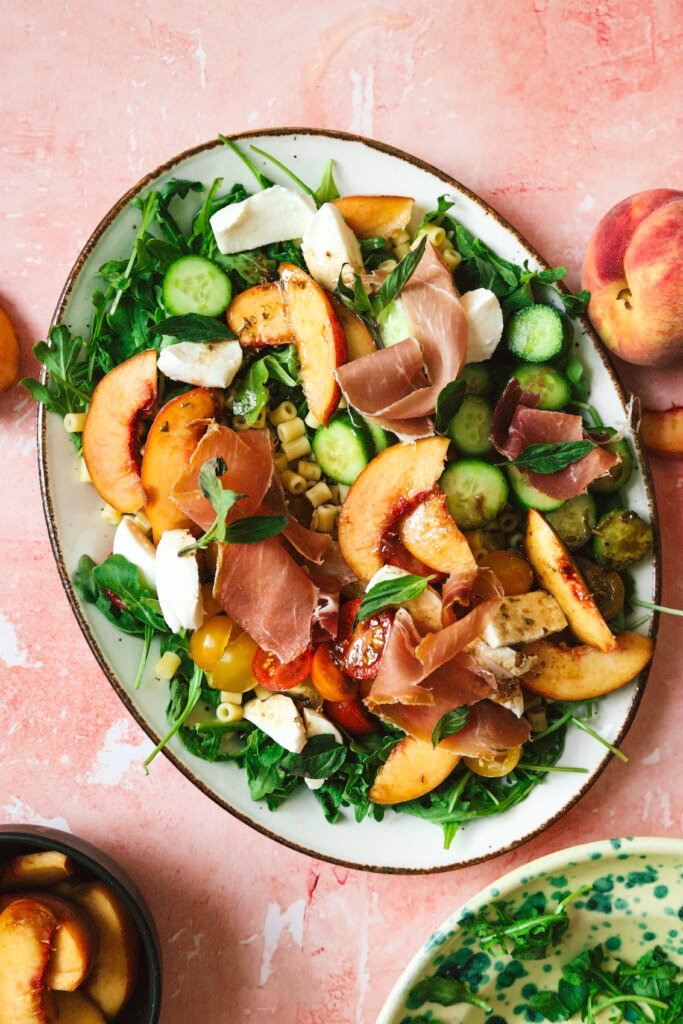
Summer Chopped Salad with Peaches, Prosciutto and a Sweet Balsamic Dressing
Adopted from the Kitchn
Serves 4-6
Ingredients
- 16 oz/454 g ditali pasta
- 1 clove garlic, mined
- 1 tbsp dried oregano
- ¼ cup/60ml olive oil
- 2-3 tbsp balsamic vinegar
- 1-2 tbsp of brown sugar
- 2 heads romaine lettuce (~ 1 pound), chopped to bite-sized pieces
- 1 medium English cucumber, cut lengthwise and sliced thinly
- 6 oz/168 g (~ 1 cup) multi-colored cherry tomatoes, halved
- 2 large ripe peaches, pitted and cut into ½ inch cubes
- 4oz/112 g mini mozzarella cheese balls, halved
- 4 oz/112 g Prosciutto or Mortadella, tear into bite-size pieces
- For Garnish: fresh basil leaves, freshly ground black pepper and salt
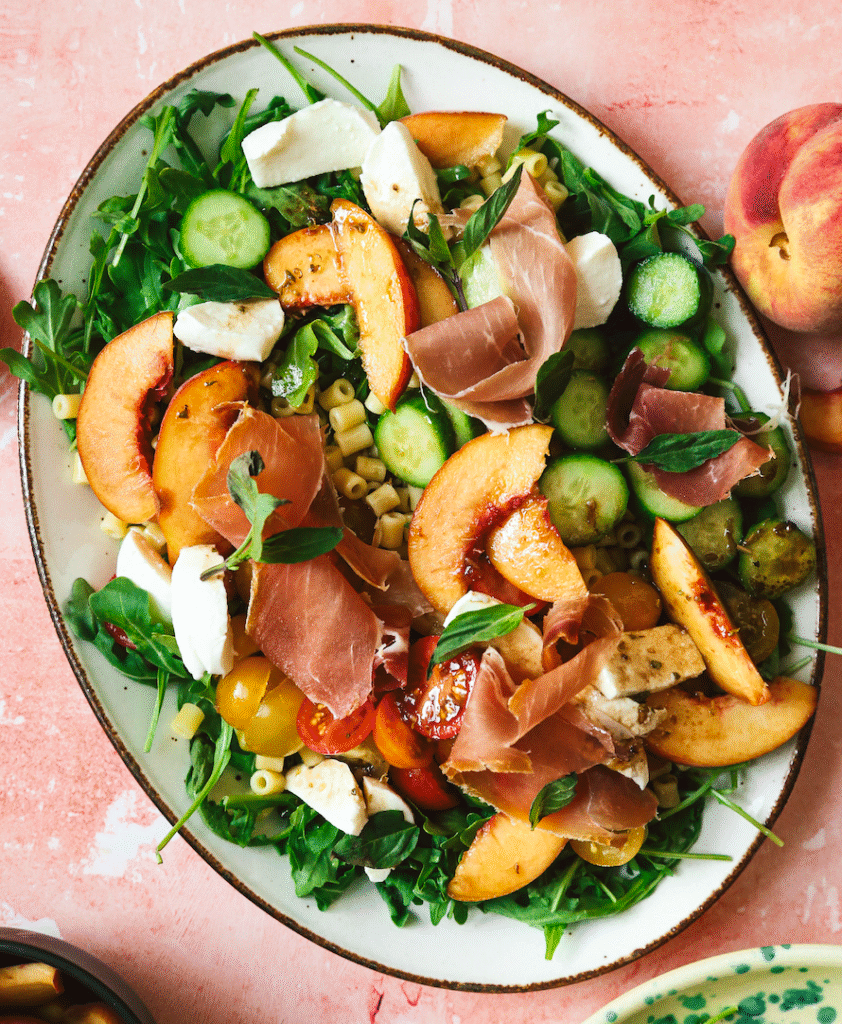
Method:
- Cook the ditali pasta according to the package instructions. Once it’s cooked, rinse with cold water. Drain the pasta. Drizzle with some olive oil to prevent sticking.
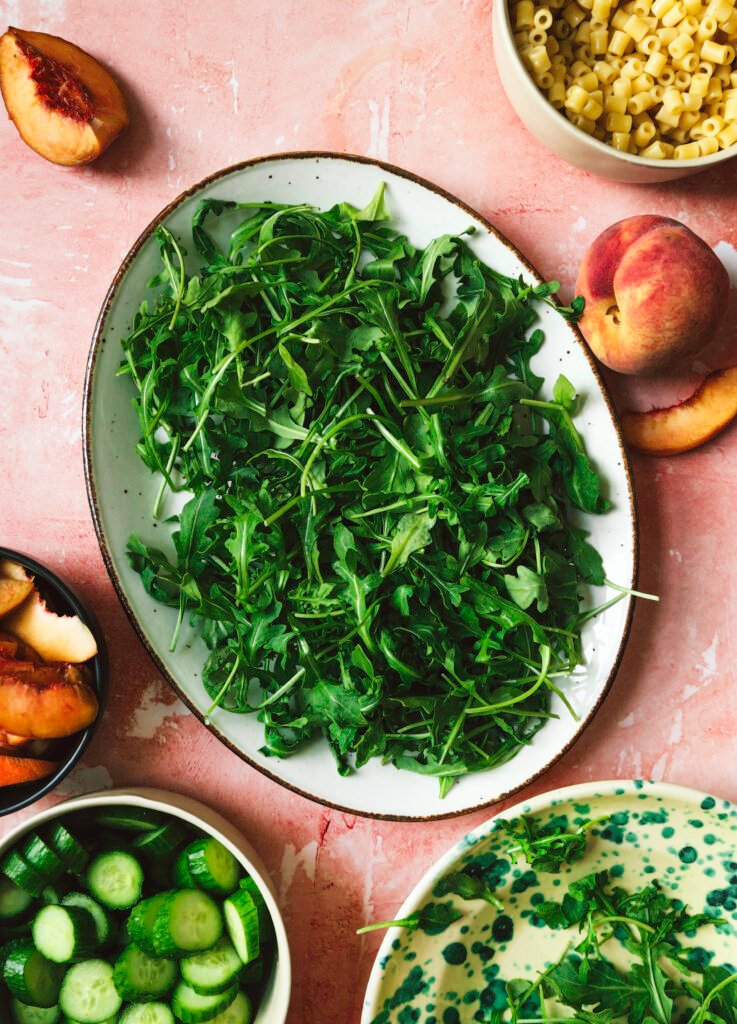
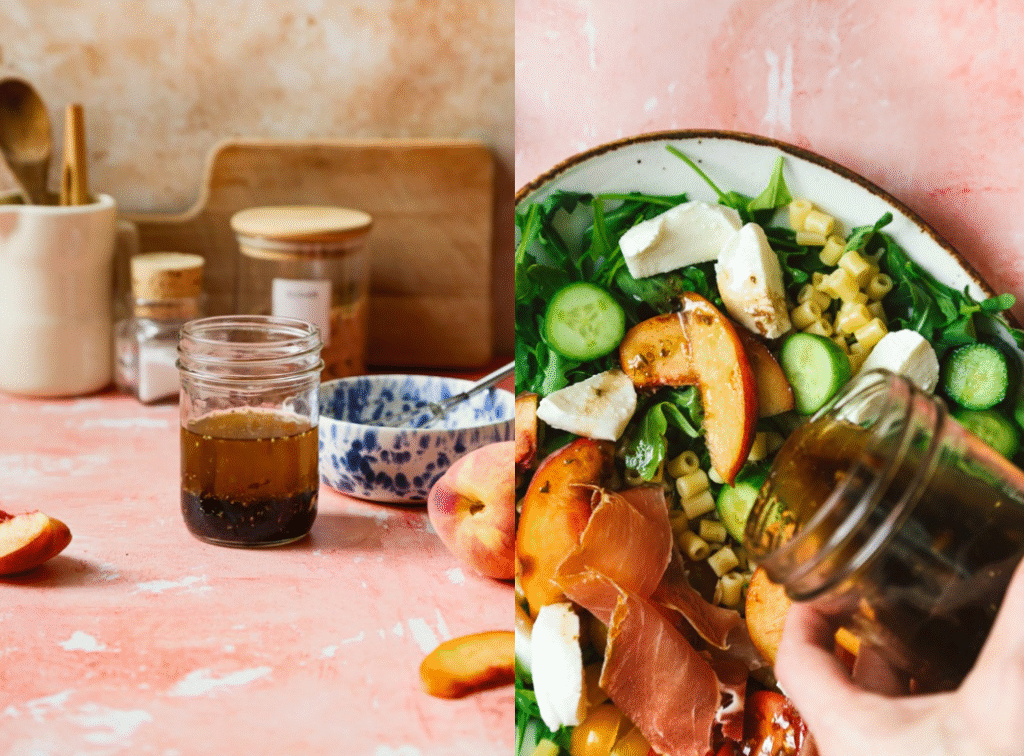
2. Prep the dressing: in a jar, add in minced garlic, dried oregano, olive oil, and balsamic vinegar, the remaining granulated sugar and salt. Shake or whisk to combine.
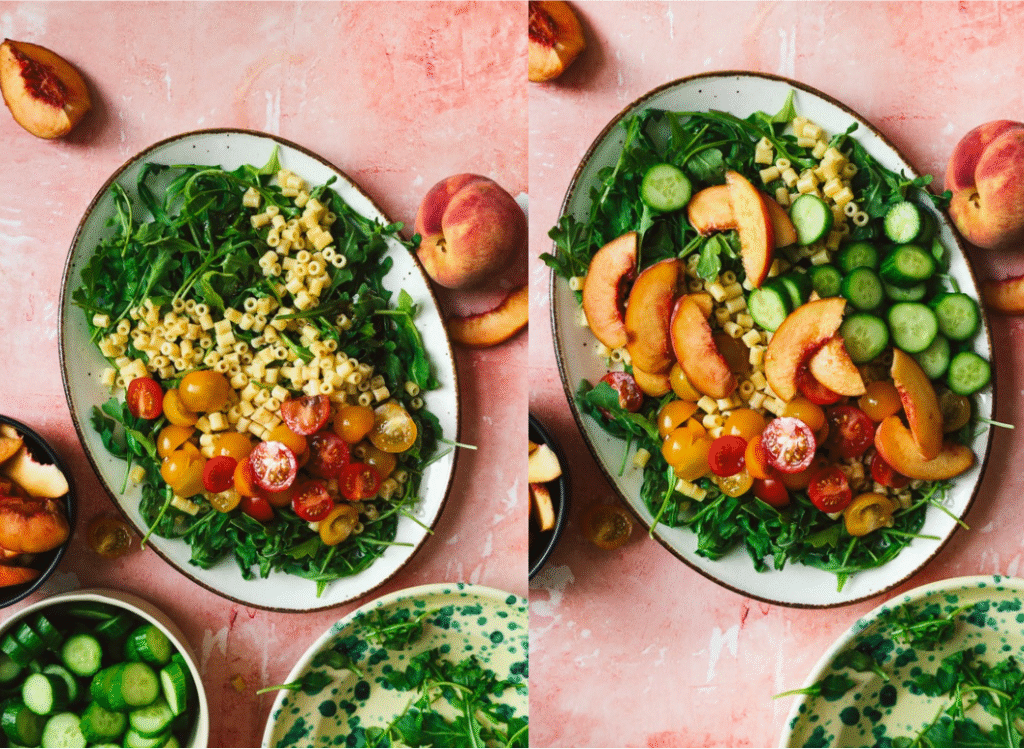
3. In a large bowl, layer the lettuce, add in cherry tomatoes, cucumbers, peaches, mozzarella cheese balls, and cooked ditali. Drizzle half the dressing, toss gently to coat.
4. Top the salad with the basil leaves, your choice of cured meat, and balsamic glaze. Season with salt and freshly-ground black pepper. Top with the remaining dressing.
Dietitian Note’s
- To save time, cut up the ingredients and make the dressing ahead of time.
- To make it plant-based, replace the cured meat with canned chickpea (drain before use).
- If you can’t find ditali, macaroni is a good option, too!
- You can double the dressing ingredients to make extra.
Summer salads don’t have to be simple sides- they can shine as the main dish. All you need are some fresh, seasonal ingredients and a touch of balanced sweetness in your dressing. Whether for a family meal or a summer gathering, a well-composed salad is a delicious way to make vegetables the star of the plate. Have you made your own salad dressing before? Let me know in the comments!
References
Canadian Sugar Institute. About Us. Canadian Sugar Institute, 2026, https://sugar.ca/about-us
Canadian Sugar Institute. Frequently Asked Questions About Sugar. https://sugar.ca/sugar-basics/frequently-asked-questions-about-sugar/